Shiva as Lord of the Dance
In this piece the Shiva is meant to show off a divine
energy. The divine energy comes from the cosmos of the Hindu religion. The
philosophy from Hindu religion is that all things have to come to a natural end
so then can be new again. The Shiva is the agent that brings the end to that
things can be reborn.
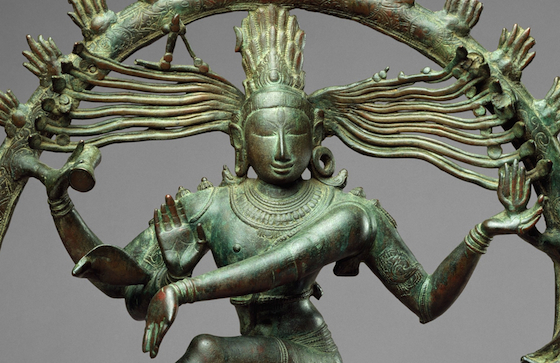
This artifact of the Shiva shows the audience the ideal
physical qualities of the figure. Even
though the Shiva is a still statue, it still gives off movement as if it was
dancing. It is dancing within the cosmic circle of fire, which is the constant
and synchronized creation and destruction of the universe. The cosmic circle of
fire the surrounds Shiva represents the encapsulated cosmos of space, mass, and
time. This is an endless cycle of extinction and renewal, which moves to the
beat of the Shiva’s rhythm of his drum and footsteps. The details of the figure
show the movement of Shiva using the drum with his hands with his power, and
his foots creating the rhythm. In the Shiva’s lower right hand, his palm is
raised, facing the viewer. This is a gesture of the abhaya mudra, which means
“be not afraid, for these who follow the path of the righteousness will have my
blessing.” On the upper right hand, the damaru is being held; this is the drum
that acts as a creation and passage of time. The upper left hand has the Agni.
This is the flame of destruction that destroys the sounds of the damaru. The
lower left hand goes across the Shiva’s chest, with the palm facing down. This
sign signifies spiritual elegance and nirvana through mediation and mastery
over one’s viler appetites. The right foot of Shiva is on top of the huddled
dwarf, which is the demon Aspasmara. This demon represents the personification
of ignorance. Shiva has long hair to symbolize the hair of yogi. The hair is so
long that is goes out across the space of the cosmic circle of fire the resembles
the universe. Shiva’s face seems to be in tranquility even though his purpose
and actions have a chaotic sense to them. It is so at peace because it masks
the god’s eternal essence.


This was very intriguing to read and very insightful I did not think Shiva was such a calm person that is there to cause chaos as well as harmony. Although when you look at the detail placed into such a divine figure, you can see that Shiva represents a great importance to those who honor him; and what he does.
ReplyDeleteHello Amanda,
ReplyDeleteI really liked your post for a couple of reasons. First off, I did mine on the same piece as you so it was very easy for me to connect and understand what you were saying. I also really enjoyed the specific details you gave of what the Shiva is meant to express and show us as the audience. And finally, I learned a couple new things from your post that I wish I would have included in mine. Overall, great post!!!