Sesshū
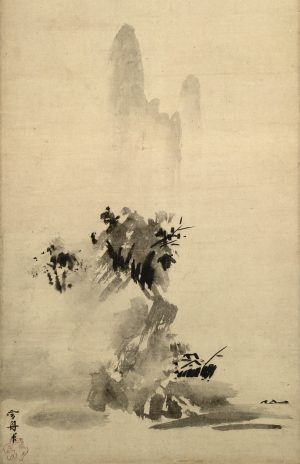
This painting has a very distinctive technique used to
create a landscape. The technique is called haboku, which means splashed ink or
broken ink. This technique became very popular in 1420-1506, because of master
Sesshū Tōyō. The painting does not have a name, most know it as “Sesshū”.
Medium used for this piece is simply just ink on paper. The scroll is about
148.6 centimeters by 32.7 centimeters. The artist who took influence from Sesshū
was named Bokushō. The process they did to create this landscape was by
applying wet, dark ink in a rapidly fashion to paper. To get the shapes that
were desired, the artist had to have light brush strokes to make the soft, and diffused
effect. In the piece there are no harsh lines or forced figures, but still
creates a prominent image of a landscape. The haboku technique requires a lot
of patience and Zen. Often, the artists who use this technique are Zen Buddhist;
they paint this way to celebrate their mindset. The technique is more than just
a form to create art, but also a spiritual practice for Buddhist. Because the style
reacted by Sesshū Tōyō was very popular during this time, painters made it attraction
in literati. Artists would even make seals and signatures that used the
splashed ink technique. Eventually, a school was developed called the Unkoku School
and the Hasegawa school. Here they educated painters to technique used by Sesshū
and the significance of Zen. Many other forms of education celebrated this
style and passed it on in a traditional way. This is how Japanese artist
embraced a stylistic lineage.
https://smarthistory.org/japan-kamakura-azuchi-momoyama/


I love reading about the ink painters of the East. I'm glad that someone chose this piece to highlight. I almost did my paper on this one, but I chose Sesshu Toyo's winter landscape instead. They're very different from each other in technique, but both are very expressive. You definitely feel the emotions in his paintings. The simple ways in which these artists use line and color to share their mood is fascinating. It kind of reminds me of a modern abstract painting where the artist wants to share the essence of the element without actually painting the element.
ReplyDelete