Seated terracotta figure
Seated Figure
(Djenné peoples)
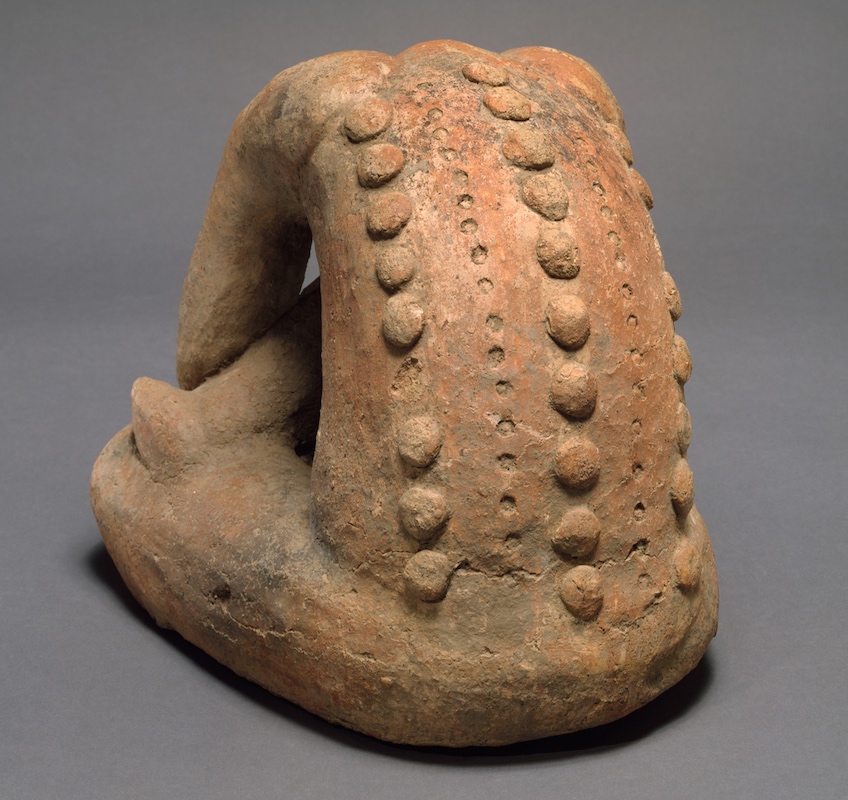
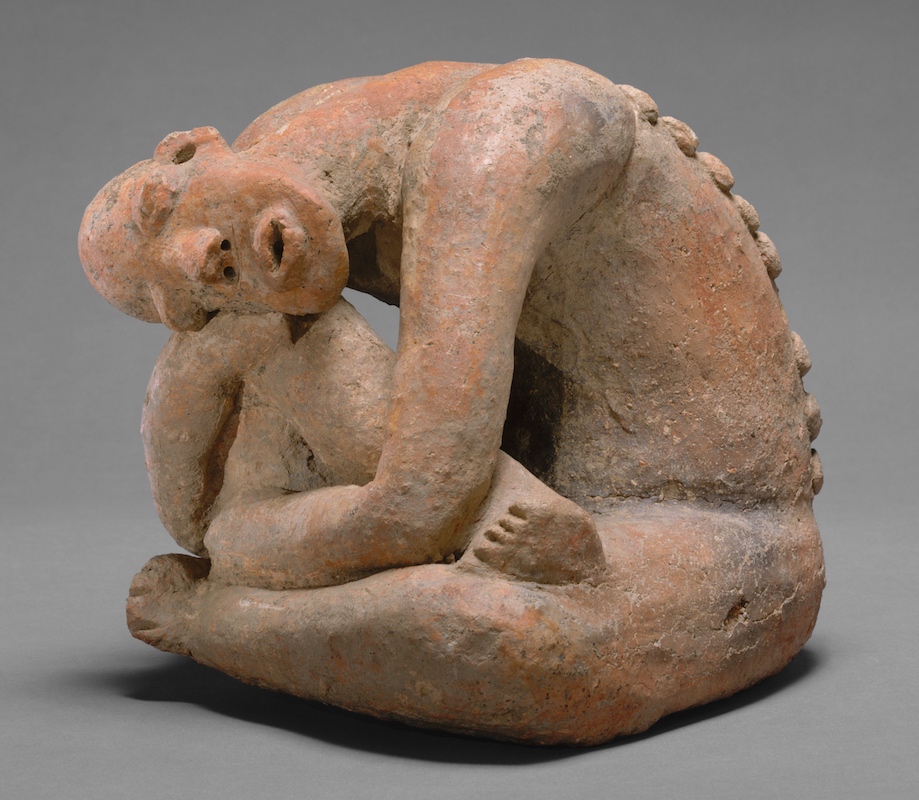
This terracotta of Djenné peoples figure is posed in a
somewhat, unnatural way. The figure is seated and hunched, it is pulling on
knee up which wraps around its upper body. Wrapped around its bent leg are both
arms clasping each other. The figure’s head is resting on the raised knee.
Because the posture is so hunched, it gives off a meditative vibe. Also the
expression of the face matches this seeming to be calm and content, even with
its exaggerated features like its large ears, expanded eyes, and long mouth.
These are all features that were well used stylistically in other works from
this African region. On the hunched back are bumps and engraved holes. These
decorative add on are organized vertically along the back. The seated figure is
about 25/4 centimeters by 29.9 centimeters. There are over 1000 figures that
are similar to this piece. These objects were found before the colonial period,
in the 13th century. These figures were formed in the era of the
Empire of Ghana, which was around c. 400 through c. 1200. The terracotta figures
associated with this civilization display women and men, individually and in
pairs. The terracotta figures are all diverse in poses such as kneeling, on horseback
and sitting like this figure. Because the terracotta figures are all diverse in
imagery and the skill they were formed with show of the mature sculptural
heritage of a sophisticated urban culture. There is no clear reason to why
these pieces were made. Some assumptions are that these figures give off an
abstract display of a particular disease that occurred in this time and region.
Possibly made to ward of any future illness. Also, another opinion is that
these figure were simply designed to give representation the human form in an
expressive and creative way. From the sub-Sahara Africa, terracotta figures are
one of the earliest known examples of art. This seated terracotta figure comes
from the inland delta of the Niger River. This location is now near the present
day home of the Bamana peoples and Dogan peoples.
https://www.khanacademy.org/humanities/art-africa/west-africa/mali1/a/seated-figure-djenn-peoples


Hello Amanda,
ReplyDeleteI found that a lot of different students did a post on the terracotta, but yours truly stood out of all of them. I felt that you did a fantastic job at explaining the details of this piece of art. This really helped me understand and actually interpret what makes this piece so special. With that being said, it surprises me that there isn’t a specific reason to why these were created rather than just assumptions from other individuals. Well done!!!
Hey Amanda, I agree with what Justin said I think you really captured and explained the detail of this terracotta figure, really well. I did not think the meaning behind the bumps and holes on the back were for decoration; I thought they were placed to signify or show a type of disease. Which is what some people think these details show. I though it was an interesting post, I liked it.
ReplyDeleteHi Amanda! As I was reading your post I thought you did an amazing job explaining the detail of the artwork. I personally think it is just so interesting and I wonder why they put it in the position that they did,
ReplyDeleteI also did a post on this artwork and I find it interesting that you said this figure is in a meditation position. I had an opposite approach and thought that the figure might be in some sort of pain because of the qualities. Very good post!
ReplyDelete